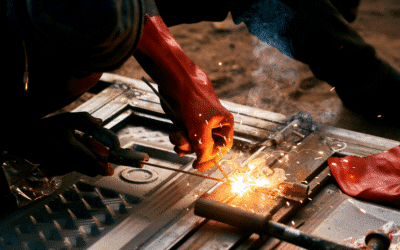
Welding is one of the most essential processes in industrial fabrication, but it also introduces one of the most common technical challenges: distortion.
Whenever heat is applied to steel during welding, the material expands. As the weld cools, the material contracts again. This heating and cooling cycle creates localized stresses within the metal that can cause parts to move, bend, or twist slightly from their original position.
For engineers and fabrication teams, managing distortion is critical to maintaining dimensional accuracy. Understanding why distortion occurs (and how experienced fabricators control it) is an important part of ensuring that large assemblies remain aligned and perform as intended once installed in the field.
Why Heat Causes Steel to Move
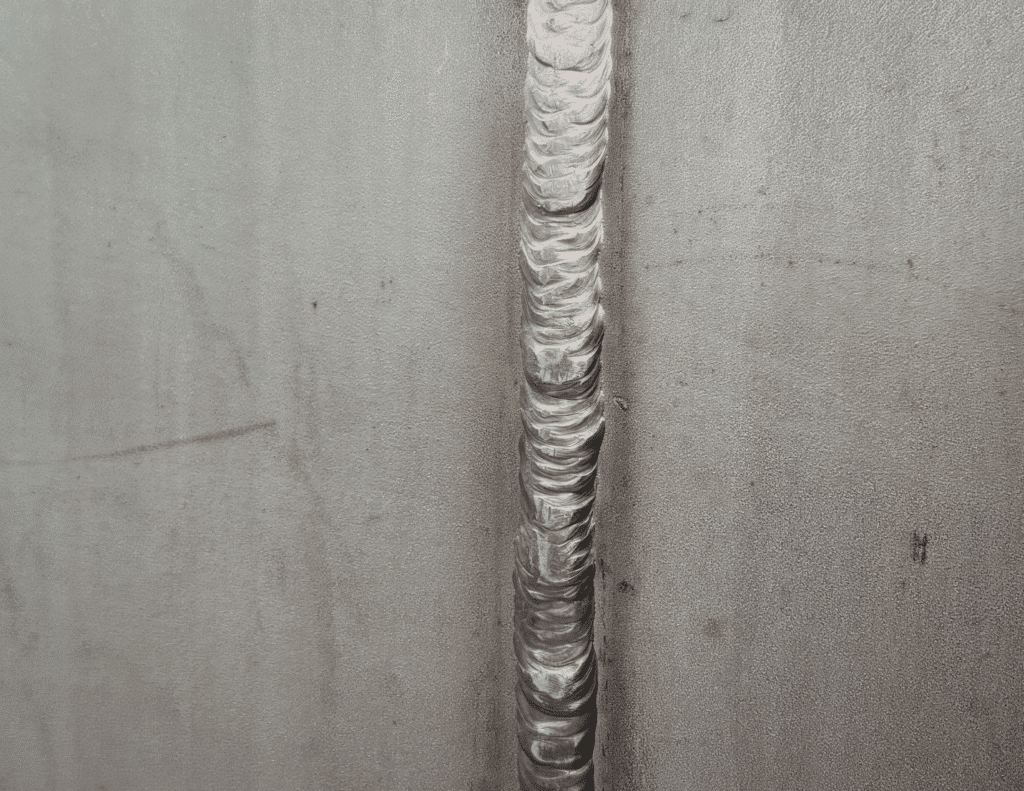
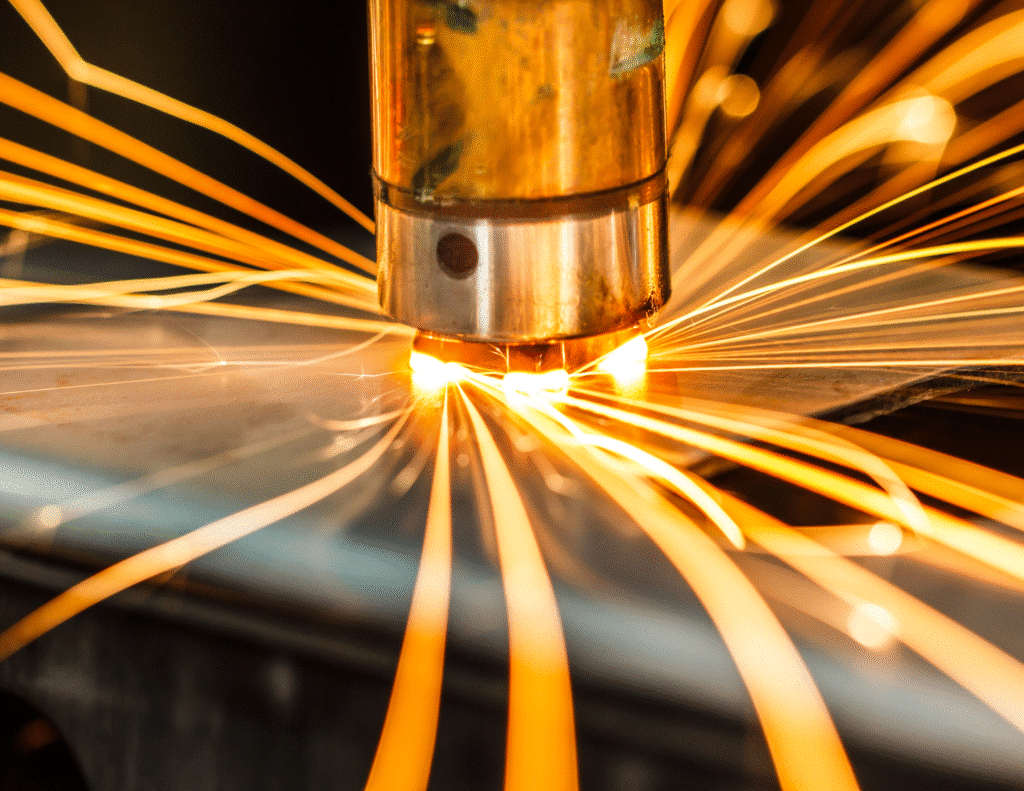
Welding distortion begins with the thermal behaviour of metal. When a weld bead is applied, the immediate area surrounding the weld is heated to extremely high temperatures. As the metal expands during heating and then contracts during cooling, it can create uneven stresses within the structure.
Because welding heat is concentrated in a small area, expansion and contraction rarely occur uniformly across a component. This uneven thermal movement can cause plates to pull together, edges to warp, or assemblies to shift slightly out of alignment. In large structures, even small dimensional changes can become significant over long distances.
The amount of distortion that occurs depends on several factors, including weld size, joint design, material thickness, and the overall geometry of the assembly. Fabricators must account for these variables during the planning stage to prevent unwanted movement from affecting final fit-up and performance.
Planning the Weld Sequence
One of the most effective ways to control distortion is through careful weld sequencing. Rather than applying welds in a random order, experienced fabricators plan the sequence of welds to balance heat input and minimize the cumulative stresses introduced into the structure.
Alternating weld locations, staggering weld passes, and distributing heat evenly across an assembly can significantly reduce the amount of movement that occurs during welding. This approach helps ensure that stresses introduced in one area are balanced by welds applied elsewhere.
In complex fabrications, weld sequencing is often considered during early project planning. By understanding where distortion risks exist, fabricators can establish a welding strategy that protects dimensional accuracy throughout the build process.
“Welding distortion isn’t a mistake, it’s a physical reality. The skill lies in knowing how to control it.”
How Experienced Fabricators Manage Distortion
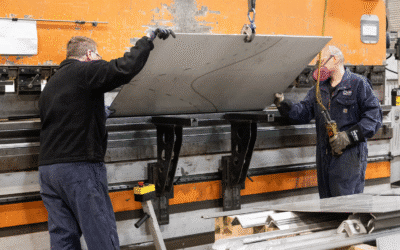
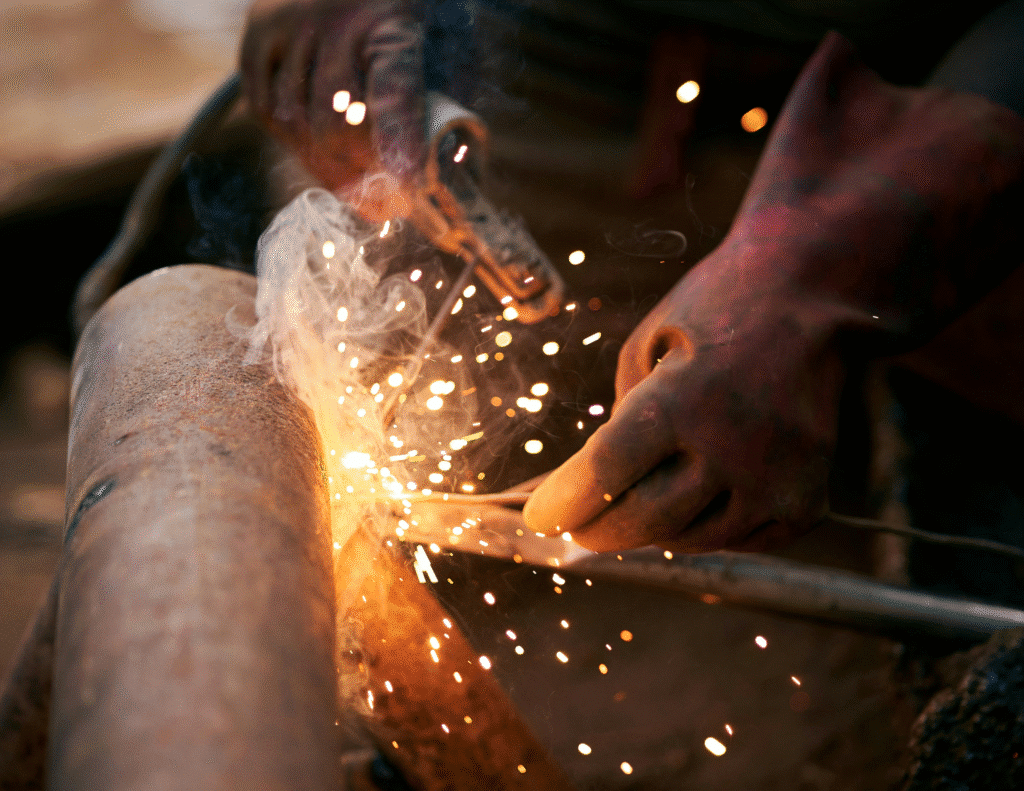
Beyond weld sequencing, several additional techniques are used to manage distortion during fabrication. These include strategic fixturing, controlled weld sizes, balanced joint preparation, and proper material handling throughout the assembly process.
Fixturing systems can hold components in alignment while welds are applied, helping resist movement caused by thermal stresses. In other cases, fabricators may intentionally anticipate minor movement and compensate for it during fit-up so that the final structure settles into the correct dimensions once welding is complete.
At D&R Custom Steel, distortion control is treated as an integral part of fabrication planning. Through disciplined welding practices, experienced tradespeople, and careful process sequencing, assemblies are built to maintain alignment and structural integrity from the shop floor to final installation.