In steel fabrication, forming is the stage where a flat plate becomes functional. It is the process that transforms raw material into brackets, frames, channels, and structural components that must integrate seamlessly into larger assemblies. While forming may appear straightforward, its accuracy has a significant impact on how well a component performs in the field.
For engineers and project teams, forming accuracy directly influences fit-up, alignment, and installation efficiency. Even small deviations in bend angles or dimensions can create challenges later in the fabrication or installation process, especially on multi-component assemblies.
Understanding how modern forming is executed (and why precision matters) is essential to achieving consistent, reliable results.
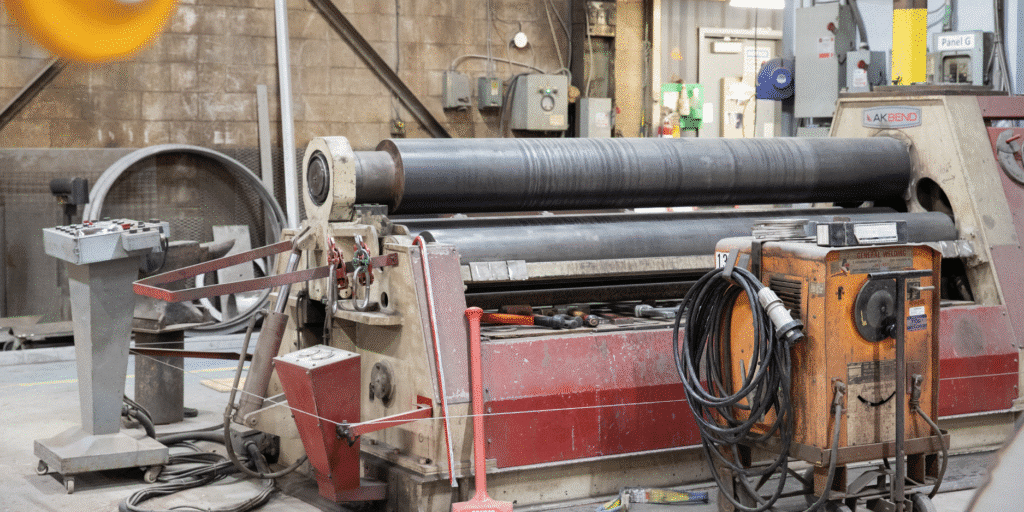
The Role of CNC Press Brake Technology
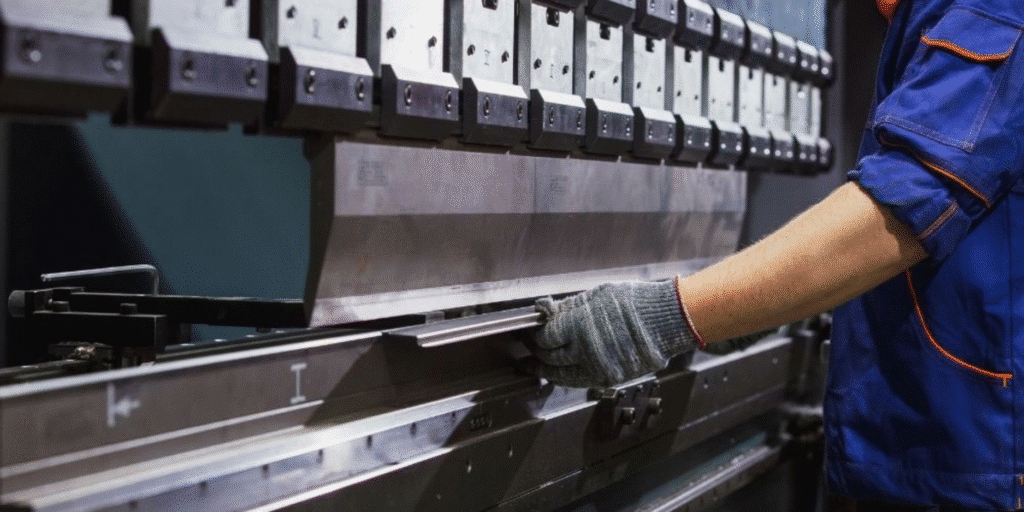
At D&R Custom Steel, forming is performed using CNC press brake technology, which allows for precise control over bend angles, dimensions, and repeatability. CNC press brakes ensure that each formed part matches the intended design, even when producing multiple identical components.
One of the key advantages of modern forming occurs before a part ever reaches the machine. Offline programming allows bends and forming sequences to be digitally modelled in advance. This process confirms feasibility, identifies potential issues, and reduces ‘trial and error’ adjustments on the shop floor.
By validating forming steps digitally, efficiency improves while consistency increases: resulting in cleaner parts, reduced rework, and predictable outcomes during assembly and installation.
Why Forming Accuracy Matters Downstream
Forming accuracy has a direct effect on downstream fabrication stages. Precise bends ensure proper fit-up during assembly, reduce stress introduced during welding, and support consistent alignment across complex builds.
When forming is inconsistent, the impact is often cumulative. Misalignment can complicate welding, increase distortion, and require corrective measures that affect both schedule and cost. Over time, these small inaccuracies can compromise the structural integrity and service life of the equipment.
Reliable forming creates a solid foundation for every step that follows. With accurate, repeatable bends across a wide range of materials ( including stainless steel, aluminum, and specialty alloys) CNC press brake forming plays a critical role in producing equipment that performs as intended in real operating conditions.
“Forming may look simple, but its accuracy determines how everything else comes together.”
Building Reliability Through Precision Forming
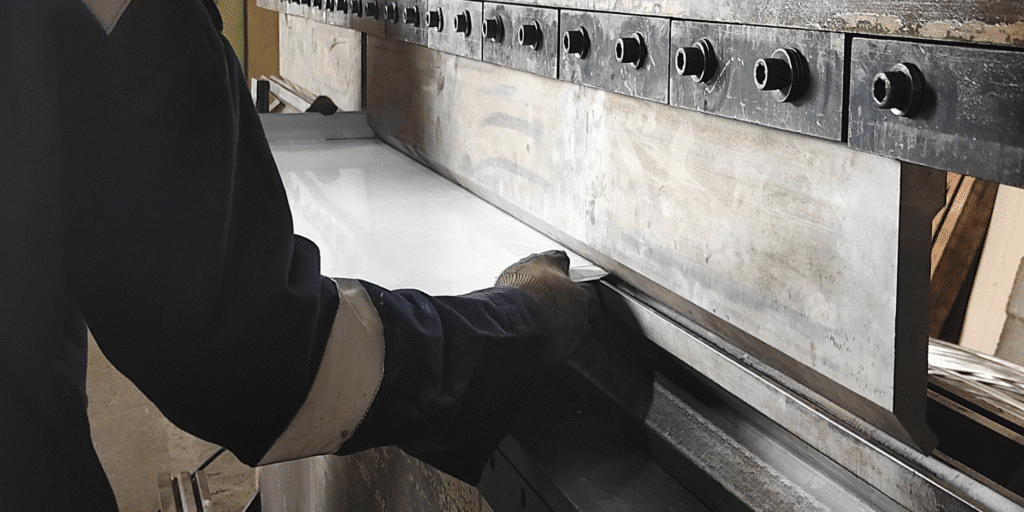
High quality forming is not just about meeting dimensional requirements on a drawing; it plays a critical role in ensuring long-term reliability once equipment is placed into service. Components that are accurately formed fit together as intended during assembly, reducing residual stress, minimizing corrective work, and supporting uniform load distribution throughout the structure. These factors directly influence how equipment behaves under real operating conditions.
When forming accuracy is compromised, the effects often carry downstream. Misaligned parts can complicate welding, introduce distortion, and require additional force during fit-up, all of which can affect structural integrity and fatigue performance over time. In contrast, precise forming creates consistent geometry, allowing subsequent fabrication steps to proceed smoothly and predictably.
At D&R Custom Steel, forming is treated as a critical process, not a secondary step. Through CNC press brake technology, offline programming, and experienced operators, forming accuracy is carefully controlled to support the overall integrity of the build. When forming is done right, it enables cleaner welding, more efficient installation, and dependable performance throughout the equipment’s service life.