When discussing industrial fabrication, conversations often focus on welding, machining, inspections, and the finished piece of equipment. While each of these plays an important role, one of the most significant decisions is often made long before fabrication even begins, material selection.
It may seem like a straightforward specification on an engineering drawing, but choosing the right material has a direct impact on how equipment performs throughout its entire service life. From corrosion resistance and structural strength to maintenance requirements and lifecycle costs, material selection influences far more than the fabrication process itself. As industrial facilities continue to place greater emphasis on reliability, efficiency, and long term asset performance, material selection has evolved from a procurement decision into an engineering strategy. Selecting the right material isn’t simply about meeting today’s project requirements. It’s about ensuring equipment continues to perform in demanding environments for years, and often decades, after installation.
For owners, engineers, municipalities, and industrial operators, that long term perspective has never been more important.
Every Environment Places Different Demands on Equipment
No two operating environments are exactly alike! Equipment designed for a municipal wastewater treatment facility faces a very different set of conditions than equipment used in chemical processing, food manufacturing, mining, or power generation. Moisture, chlorides, aggressive chemicals, temperature fluctuations, abrasion, and continuous operation all influence how materials perform over time. This is why there is rarely a single “best” material for every project.
Different grades of stainless steel, duplex stainless steels, nickel alloys, and other specialty materials each offer unique advantages depending on the application. Some provide superior corrosion resistance; others offer greater mechanical strength, improved resistance to chloride stress corrosion cracking, or enhanced performance in highly aggressive operating environments. The goal is not simply to select the most expensive material available. Instead, engineers work to balance performance, durability, fabrication requirements, maintenance expectations, and overall lifecycle value to determine which material is best suited for the application. As infrastructure continues to age and owners look for longer service life from their assets, those decisions become increasingly important.
Material Performance Depends on More Than the Material Itself
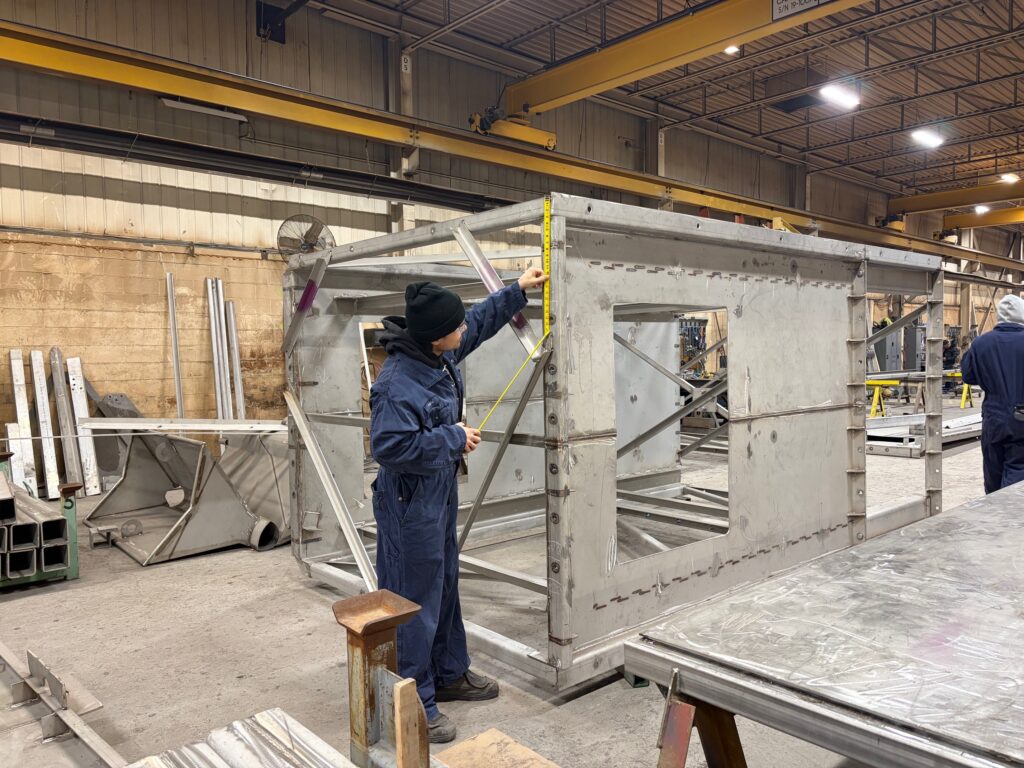
Choosing the right alloy is only the beginning, even the highest performing material can be compromised if it is not handled and fabricated correctly. Throughout the fabrication process, material integrity must be protected through proper storage, handling, welding procedures, machining practices, cleaning, passivation where required, and quality inspections. These processes help preserve the properties that made the material the right choice in the first place.
This is particularly important when working with stainless steels and specialty alloys, where contamination or improper fabrication practices can affect corrosion resistance and long-term performance. Material traceability also plays an important role throughout fabrication. Verifying heat numbers, maintaining documentation, and confirming that the specified material is used in the correct locations helps provide confidence that the finished equipment reflects the original engineering requirements.
In many ways, material selection and fabrication quality work hand in hand. One supports the other, and together they contribute to equipment that performs as intended throughout its service life.
“Choosing the right material is only the first step. Protecting its performance throughout fabrication is what helps deliver long term reliability.”
Looking Beyond the Initial Cost
One of the biggest misconceptions surrounding material selection is that it should be driven primarily by purchase price. While initial cost is certainly an important consideration, experienced project teams understand that the lowest material cost does not always result in the lowest overall project cost.
Equipment that requires frequent maintenance, experiences premature corrosion, or needs to be replaced years earlier than expected often carries costs that extend well beyond the original purchase price. Downtime, repairs, labour, replacement components, and operational disruptions can significantly influence the true cost of ownership over the life of an asset. This is why many owners and engineers evaluate material selection through the lens of lifecycle performance rather than initial procurement cost alone.
Investing in a material that offers greater durability, improved corrosion resistance, or longer service life may provide meaningful value over the lifespan of the equipment, particularly in demanding industrial environments where reliability is essential. At D&R Custom Steel, every project begins with the understanding that successful fabrication starts with a thorough understanding of the materials being used. From stainless steels and duplex alloys to specialty materials designed for challenging operating environments, preserving material integrity throughout fabrication is an important part of delivering equipment built for long term performance.
In industrial fabrication, material selection is about far more than what appears on a drawing. It is one of the first decisions that influences how equipment will perform long after it leaves the shop.