Clarifiers are a core component of water and wastewater treatment systems, responsible for separating solids from liquids through controlled settling processes. Their performance directly impacts system efficiency, maintenance requirements, and long term operational reliability.
Fabricating large scale clarifiers requires more than structural capability. It demands precision, consistency, and a deep understanding of how fabrication decisions influence installation and performance in the field.
For engineers and project teams, selecting a fabrication partner with proven experience in these builds is critical to ensuring that clarifier systems operate as intended.
Material Selection and Performance Requirements
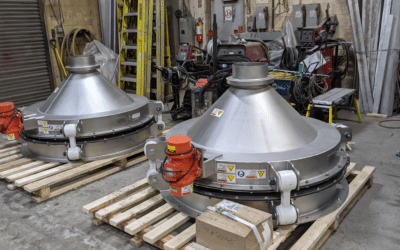
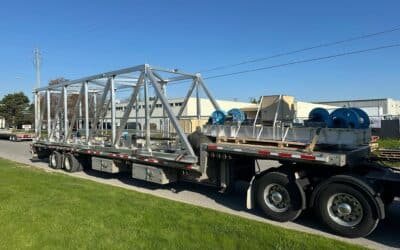
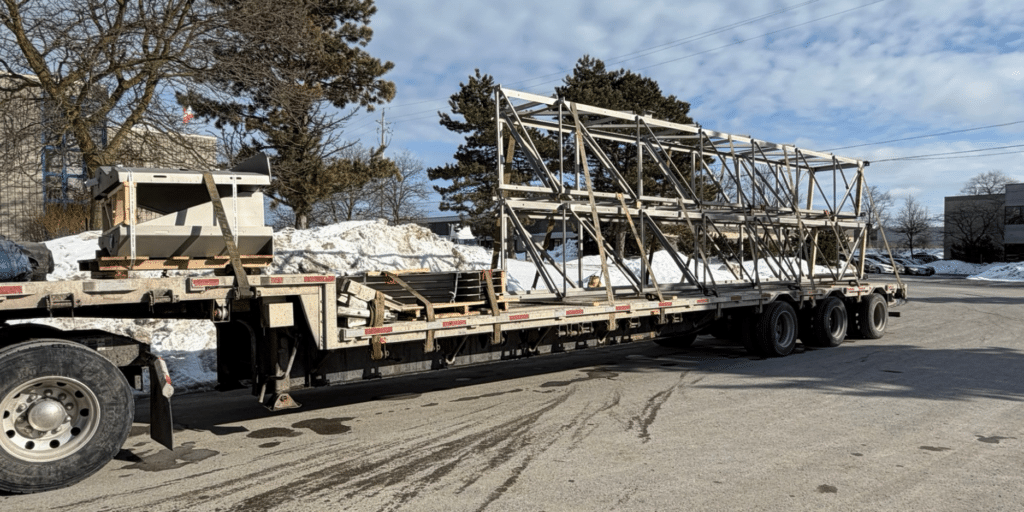
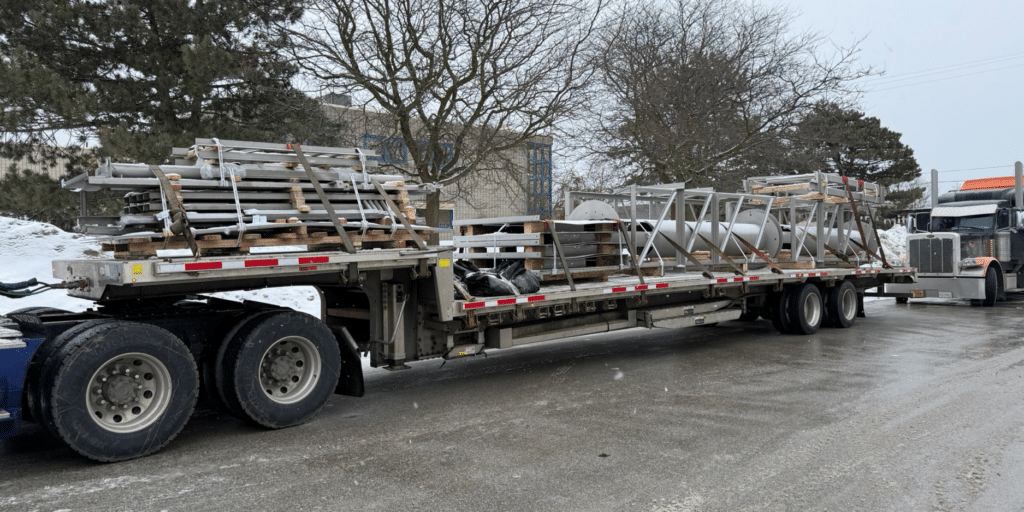
For the Greeley, Colorado project, D&R Custom Steel fabricated 80-foot clarifiers using both 304L and 316L stainless steel. Each material was selected based on its performance characteristics and suitability for the operating environment.
304L stainless steel provides strong corrosion resistance and weldability for general conditions, while 316L offers enhanced resistance to chlorides and more aggressive environments. The combination of these materials allows for optimized performance across different areas of the system.
Material selection is only part of the equation. Fabrication processes must preserve material integrity, ensuring that corrosion resistance and structural properties are maintained throughout cutting, forming, and welding.
Precision Fabrication at Scale
Large clarifier fabrication introduces challenges related to dimensional control and structural alignment. Components must be fabricated to tight tolerances to ensure proper fit up during assembly and installation.
Fit up accuracy becomes especially important as assemblies increase in size. Small dimensional deviations can compound across large structures, affecting alignment and requiring corrective work in the field.
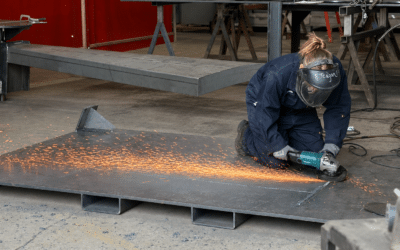
Controlled welding practices are also essential. Managing heat input and sequencing welds correctly helps minimize distortion and maintain structural integrity, ensuring that the final assembly meets both dimensional and performance requirements.
“Large scale fabrication isn’t just about size. It’s about maintaining precision as complexity increases.”
Delivering Reliable Performance in the Field
Successful clarifier fabrication extends beyond the shop floor. The goal is to deliver equipment that installs efficiently and performs reliably under real operating conditions.
At D&R Custom Steel, this is achieved through disciplined processes, experienced tradespeople, and a focus on consistency at every stage of fabrication. Each component is built with the understanding that performance in the field is the ultimate measure of quality.
Projects like the Greeley clarifiers demonstrate the importance of combining material expertise, fabrication precision, and process control to deliver infrastructure that supports long-term system reliability.