Equalization tanks are one of the most important balancing components within modern wastewater treatment systems. Their role is straightforward in theory: manage fluctuations in flow volume and stabilize the system during periods of sudden demand. In practice, however, the fabrication requirements behind these structures are far more complex.
Industrial, municipal, and storm related surges can place significant stress on treatment systems when flow rates become inconsistent. Equalization tanks help absorb these fluctuations, allowing downstream processes to operate more efficiently and predictably under changing conditions. Because these tanks often operate continuously in corrosive and high moisture environments, long term reliability becomes critical. For fabrication teams, this means that dimensional accuracy, weld quality, sequencing, and structural integrity all play a direct role in how the system performs once it enters service.
Large Tank Fabrication Requires More Than Scale
Building large scale equalization tanks is not simply a matter of increasing dimensions. As structures grow in size, fabrication complexity increases significantly. Material handling, sequencing, fit up, and distortion control all become more critical as assemblies become larger and heavier. Maintaining dimensional consistency across large tank sections requires careful planning throughout the fabrication process. Even small variations during rolling, forming, or welding can compound across a structure of this scale, affecting alignment during assembly and installation.
Sequencing also becomes increasingly important. The order in which sections are fabricated, welded, and assembled directly impacts structural alignment and weld integrity. Proper sequencing helps reduce rework, maintain tolerances, and ensure that the final structure remains true to design intent throughout fabrication.
Experience Still Plays a Critical Role
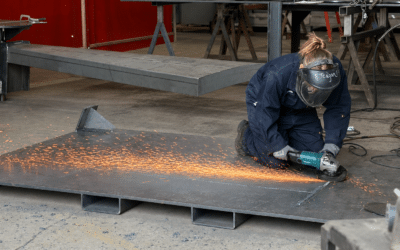
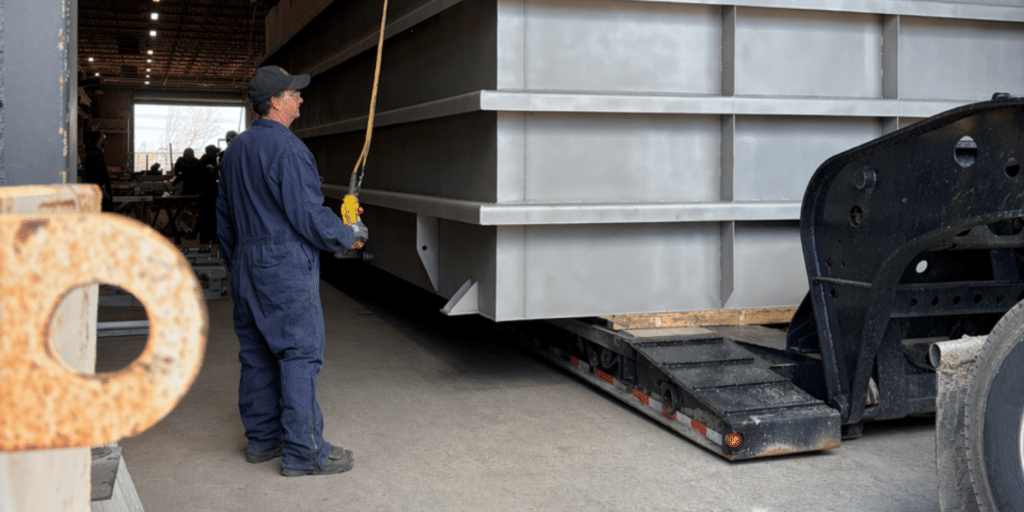
While modern fabrication equipment improves efficiency and consistency, large tank projects still rely heavily on experienced tradespeople who understand how these structures come together in real world conditions. One of the people behind this project is John, one of D&R Custom Steel’s senior fitters, who has spent more than 30 years building tanks and process equipment. Over the course of his career, he has fabricated well over 100 tanks supporting wastewater infrastructure projects across North America.
That experience matters because large tank fabrication often requires judgement beyond what drawings alone can provide. Understanding fit up behaviour, weld sequencing, material movement, and assembly challenges comes from years spent working directly with these systems in the shop.
“Large scale tank fabrication isn’t defined by size alone. It’s defined by how well precision is maintained as complexity increases.”
Wastewater Infrastructure Depends on Reliability
Equalization tanks are designed to support system stability, and that means reliability is essential from the moment they are commissioned. Fabrication quality directly affects how these systems perform over time, particularly in environments where continuous operation is expected.
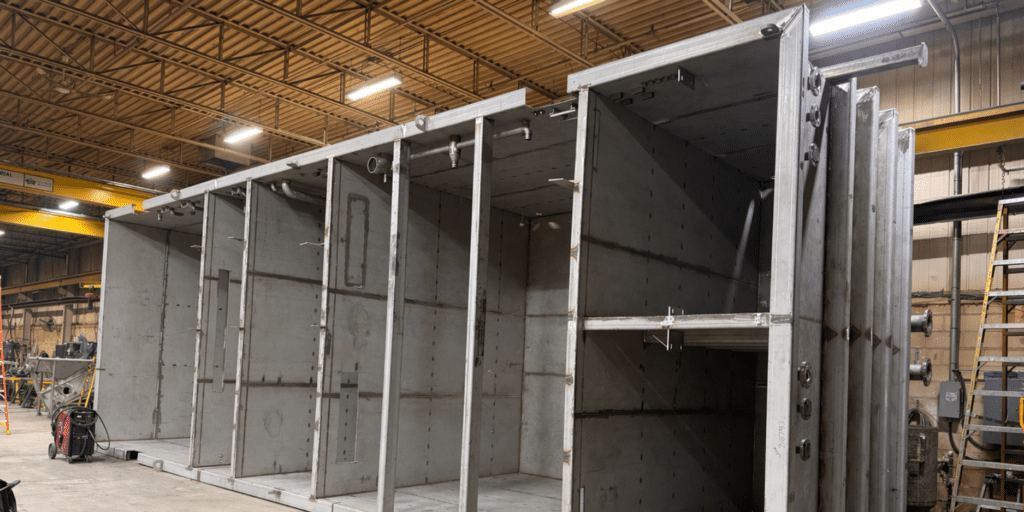
At D&R Custom Steel, wastewater treatment equipment fabrication includes a wide range of process systems, including equalization tanks, membrane tanks, bioreactors, DAF tanks, atmospheric tanks, and other specialized infrastructure components. Each project requires a fabrication approach aligned with the operating demands of the application.
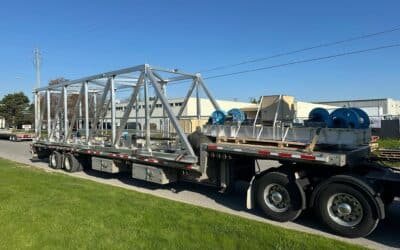
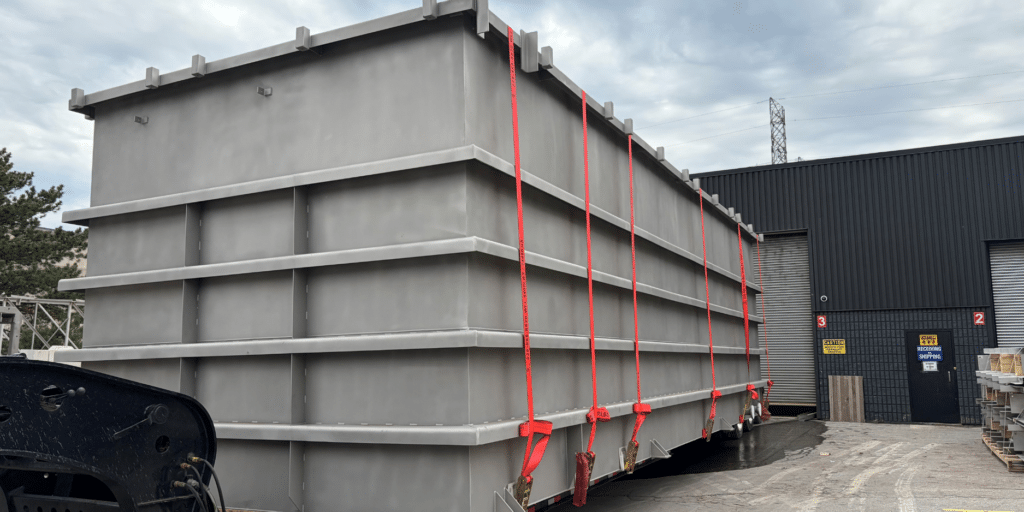
The equalization tank currently shipping through Ramsey, Minnesota before its final destination in Austin, Texas represents more than a single project. It reflects the combination of process discipline, skilled trades experience, and fabrication planning required to deliver reliable infrastructure at scale.